Study of the Good Thief
Albrecht Dürer · about 1503–1505
The crucified figure’s torso collapses to one side on the cross; a raised shoulder, tightened abdomen, and suspended legs concentrate the weight of the Crucifixion among a few fine lines.
A VISUAL HISTORY YOU CAN EXPLORE · VOLUME 01
Follow art across time, then cross it with questions of light, gesture, space, power, and attention. Art Atlas turns art history into a practice of close looking.
Art history is not a straight line of “masterpieces.”It is a set of coordinates where vision, bodies, belief, and power repeatedly meet.
Time traces how forms change.
Vision asks why we look the way we do.
CHAPTER I · CHRONOLOGY
Nine shifts in ways of seeing, from 1305 to 1923. Choose a chapter to reveal its artworks in the collection.
CHAPTER II · LATITUDES
Periods end; questions persist. Choose a visual theme and see how its answers change across centuries.
FOCUS · CLOSE READING 01
Select a coordinate in the image to open one of three looking clues.
POINT 01 / 03
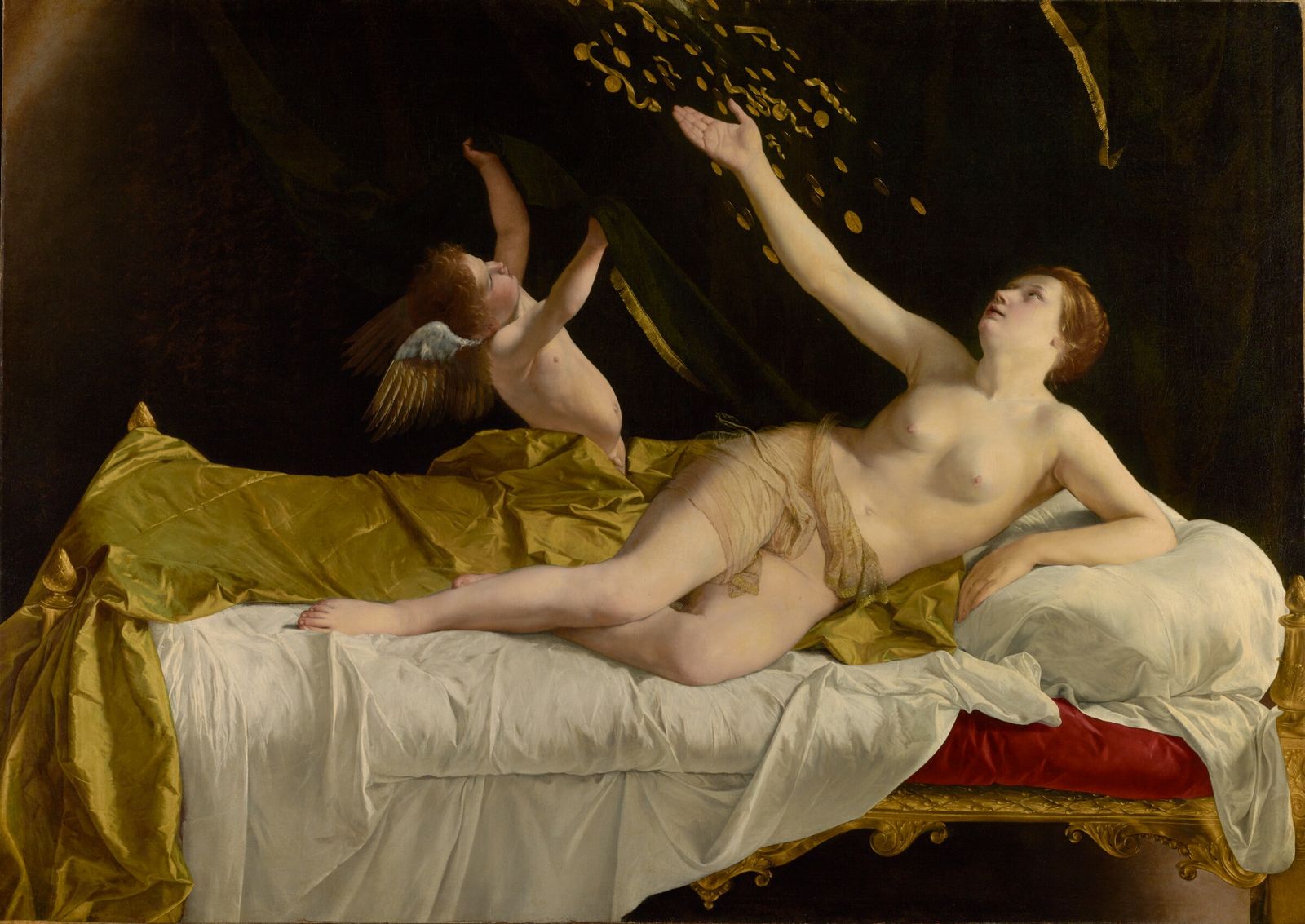
Danaë turns toward the shower of gold as if illumination itself had crossed the room. Her lifted face makes looking the painting’s first action.
“Follow the light, then ask what it makes visible—and what it withholds.”
CHAPTER III · THE COLLECTION
Each work belongs to a period and crosses several questions. Search by artist, artwork, city, or looking term.
Albrecht Dürer · about 1503–1505
The crucified figure’s torso collapses to one side on the cross; a raised shoulder, tightened abdomen, and suspended legs concentrate the weight of the Crucifixion among a few fine lines.
Albrecht Dürer · 1505
A stag beetle is enlarged to fill the center of the sheet; gleaming armor, jointed legs, and open mandibles give this small life-form the solemnity of an emblem.
Albrecht Dürer · 1516
Scrolling leaves, a crown, and a coat of arms are compressed into a precise circle; even at millimeter scale, the jewelry design retains an architectural hierarchy.
Peter Paul Rubens · about 1600–1605
A flayed torso is worked through repeatedly from several angles; muscle bundles cross like ropes, and the artist’s brown strokes dismantle the body into a structure under tension.
Peter Paul Rubens · about 1609–1611
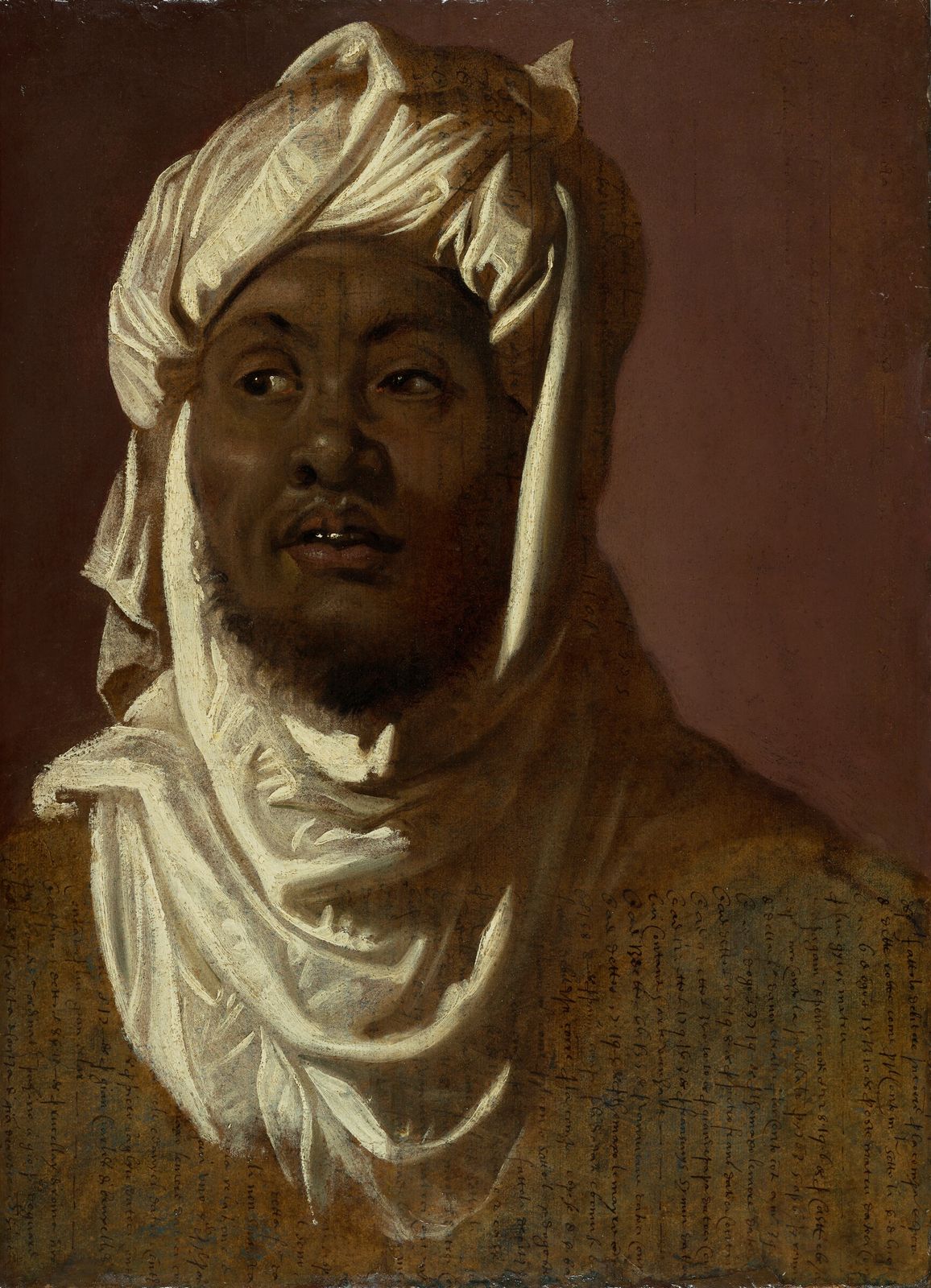
Balthazar looks upward and to one side. Layered folds of a white turban frame his dark skin, while light reflected from the cloth and his composed expression give the regal figure a sense of weight.
Peter Paul Rubens · about 1611–1612
The boar bursts from between hounds and spears; horses rear and people lean back as the entire image explodes outward from the point of collision.
Peter Paul Rubens · about 1612
Christ’s pale body lies across the space between a man in red and the Virgin in blue. Every hand bears weight, yet none can keep the body from sliding farther down.
Peter Paul Rubens · about 1613–1614
Shepherds lean toward the Christ Child from every side. Reddish-brown ink compresses raised hands, kneeling bodies, and craning heads into a vortex that closes around the center.
Peter Paul Rubens · ca. 1615-1618
The barefoot Christ Child stands on his mother’s lap and turns to look outward, while the Virgin lowers her gaze and steadies his waist and legs. Their gazes diverge, yet the Virgin’s hands firmly connect mother and child.
Peter Paul Rubens · about 1617
The man gathers his hands inside broad sleeves, and his long robe reduces the body to a stable vertical form; each fold of the unfamiliar dress is closely observed rather than relegated to background ornament.
Gian Lorenzo Bernini · 1621
No tiara conceals the pope: a tightly closed mouth, lowered brows, and heavy cope concentrate authority in a face that does not evade aging.
Orazio Gentileschi · 1621–1623
Danaë reclines on a white bed and reaches to receive the golden rain, while her maid busily catches the coins; the same light divides mythic desire and material wealth into two different actions.
Orazio Gentileschi · about 1622
Lot’s two daughters surround him with wine and embraces at the mouth of a cave. Their interlaced sleeves conceal the scheme, while the burning city in the distance reveals the disaster surrounding this intimacy.
Georges de La Tour · about 1625
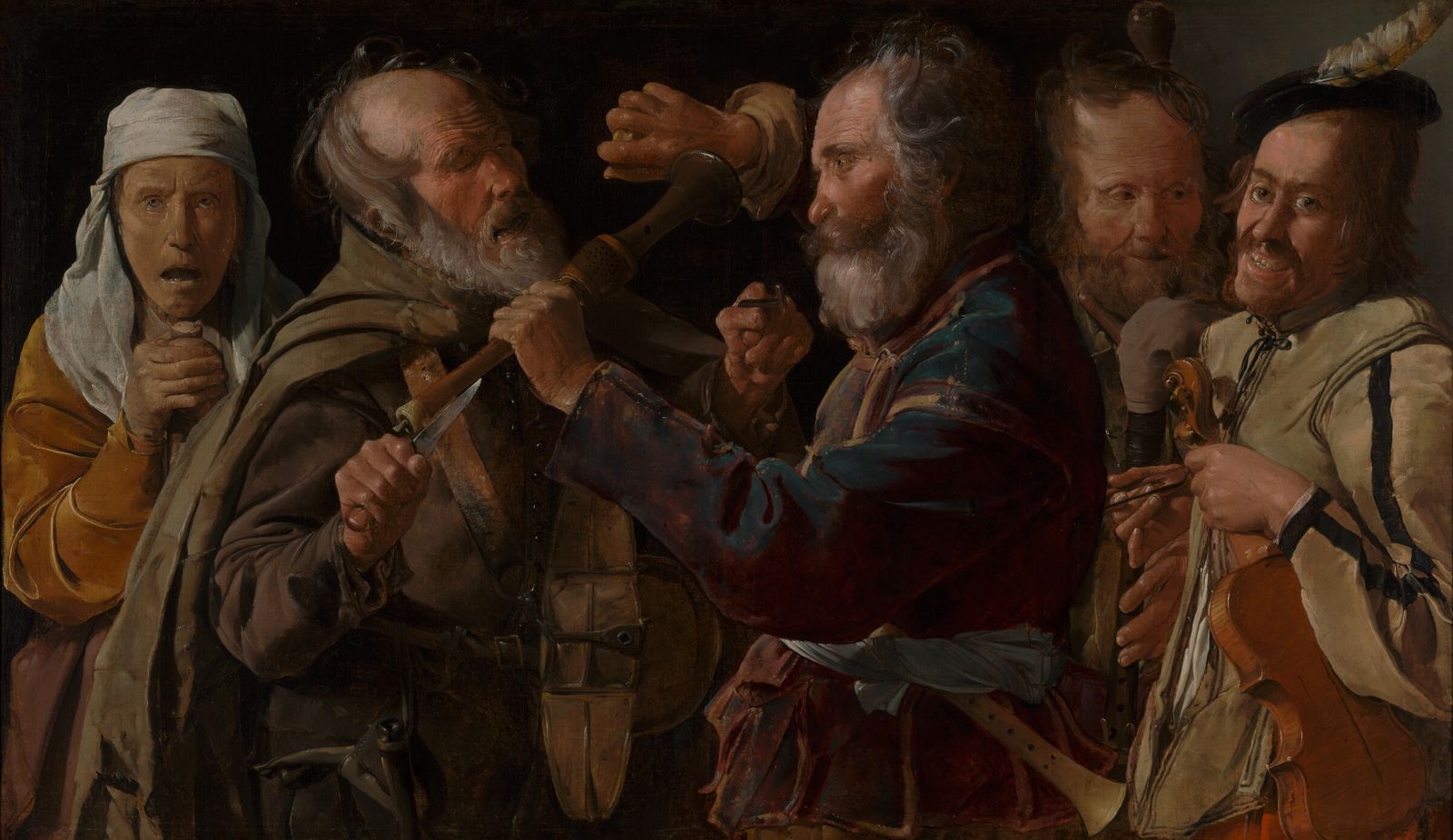
Five musicians crowd into a shallow, dark space, pulling hair, swinging fists, and biting; hands meant to make harmony become a chain of comic violence.
Frans Hals · about 1625
Saint John the Evangelist looks up from the open pages toward the sky. His purple tunic and red cloak turn the stillness of reading into a sudden moment of revelation.
Artemisia Gentileschi · about 1627
Lucretia presses a dagger toward her bare chest but turns her face upward; decisive action and a hesitant gaze pull in opposite directions.
Gian Lorenzo Bernini · 1630
Red chalk moves quickly around the young man’s slightly turned head; tousled hair and parted lips make his face seem to have just turned away from a conversation.
Peter Paul Rubens · 1635
The two Ferdinands approach one another amid banners, cavalry, and trophies. Before the handshake even occurs, the vast procession has already recast the meeting as a declaration of victory.
Gian Lorenzo Bernini · 1652–1653
A sea god twists to embrace a leaping dolphin; the man’s back, the fish’s tail, and curling water entwine in a single rising spiral.
Jean-Antoine Watteau · about 1715–1716
Three women on the same sheet stand, sit, and turn away; their folds change direction with each pose, like stage blocking broken into separate parts.
Jean-Antoine Watteau · about 1716–1717
A woman sits with her head lowered and a closed fan resting between her knees; the broad folds of her skirt spread the small gesture into a field of quiet ripples.
Jean-Antoine Watteau · about 1716–1717
A nude woman reclines at the edge of a bed as a companion behind reaches toward her shoulder; intimate care and playful suggestion waver within the same red-chalk study.
Jean-Antoine Watteau · about 1718–1719
The lovers hide beneath a tree and kiss closely; beside them a musician looks down as he plucks the strings, while a dog glances back. Three kinds of attention both shelter the secret and expose it.
Jean-Antoine Watteau · about 1720
Five actors line up beneath a tree like a cast at curtain call. Pierrot, dressed in white, stands at the center, while exaggerated hats and sidelong expressions around him still hint at the next scene.
François Boucher · about 1726–1728
Red chalk joins valley, woods, and distant city into one rolling texture, almost engulfing the tiny travelers in the foreground with the movement of the land.
François Boucher · about 1743
Venus rises at the center of the oval ceiling, as sea gods, flying child deities, and waves surge in from all sides, turning her birth into a whirling acclamation.
François Boucher · 1748
A young man offers a small bird to an elegantly dressed woman, while onlookers, a hound, and the shade of trees stage the courtship as outdoor theater.
François Boucher · about 1763–1766
Low beams press layer by layer into the depth of a barn, where scattered barrels and a family bent over their work make the interior resemble a slowly operating wooden machine.
François Boucher · 1769
Aurora dives from the clouds toward Cephalus. The tall, narrow format draws the pursuit into a current rising from the dark ground toward a pink-and-blue sky.
Angelica Kauffman · 1779–1781
Several figures are compressed into a roundel; a title above and lines of verse below turn the dramatic scene into a portable gateway to the book.
Angelica Kauffman · 1779–1781
A solitary young man stands at the center of a circular stage; his outstretched arm suddenly gives the small illustration the breadth of a speech.
Angelica Kauffman · 1779–1781
The seated family turns faces and arms toward one another to form a second circle, tightening the poet’s satire into an indoor conversation.
Angelica Kauffman · 1791
Curls and a direct gaze are fixed with the lightest pencil; the unfinished bodice instead pushes her face to the very front of the sheet.
Caspar David Friedrich · June 9, 1812
A slender pine rises alone into a broad expanse of blank paper; a few strokes of rock and a tiny figure below make emptiness itself the measure of northern air.
Caspar David Friedrich · about 1815–1821
An overturned boat lies across a snow-white beach, while distant masts and a low horizon extend the seaside silence almost without end.
Eugène Delacroix · about 1824
A woman in blue kneels beside the fallen Lara. The horizontal body, abandoned weapons, and outstretched hands turn the woodland clearing into the scene of a tragedy that has just ended.
Eugène Delacroix · 1826–1827
Marguerite huddles in a corner of the gray-washed church, while several profiles of Mephistopheles at right intrude like dark thoughts in the margin; the narrative divides into separate studies of space and expression.
Thomas Cole · ca. 1828-1829
Water descends over rock shelves in three stages; the white falls repeatedly break apart and gather again within the dense black woods, turning the cliff into a vertical rhythm.
Thomas Cole · 1829
Cavelike black rocks frame a distant city after the Deluge, while reflected floodwater leads toward dawn; the world reappears, but it must still be seen through a broken terrain.
Caspar David Friedrich · about 1830–1835
Two walkers pause beside a great rock beneath a new moon; bare branches and deep blue light make their shared journey feel as though it has reached the edge of time.
Eugène Delacroix · about 1831
In a dim interior, a woman in blue reaches out to stop a fallen man; harsh light at the doorway presses rescue, hesitation, and danger into the same narrow opening.
Eugène Delacroix · about 1844
The centaur Chiron bends down to guide the young Achilles; their overlapping arms and the arc of Chiron’s back render instruction as something passed from one body to another.
Thomas Cole · ca. 1846-1848
A tiny pilgrim stands at the mouth of a shadowed valley as a cross in the clouds pours down golden light; the long journey ends not at a building but at a brightness that cannot be entered.
Gustave Courbet · 1847
A sleeping woman’s head sinks slowly toward her shoulder; dark curls and nearly closed eyelids give the stillness of the lithograph unusual depth.
Thomas Cole · ca. 1847
A pilgrim lies fallen in a dark red wasteland as bones and collapsed rocks pile toward a lightless horizon; the end of choosing the earthly path becomes a night from which there is no way forward.
Gustave Courbet · 1849
The model stands frontally with one hand raised over the head and the other near the cheek; uneven weight and exploratory lines by the feet turn the pose into an observation under constant adjustment.
Eugène Delacroix · about 1850
A rider in a red cap urges his horse into the shallows; the lowered head, raised forelegs, gray-white clouds, and churning water turn the crossing into a brief explosion.
James McNeill Whistler · 1859
A girl sits sideways on the ground, unruly curls covering half her face and her long skirt spreading into a quiet slope; childhood is caught in a pause before she looks up.
Gustave Courbet · 1862
Wildflowers burst in every direction from a dark vase; the dense white center and scattered red and blue accents preserve the still life’s untamed impulse to grow.
Gustave Courbet · about 1864
The cave roof bears down on the shallow stream like a heavy wave; rusty brown rock and wet, gleaming water compress the space into a crevice that feels almost tangible.
Julia Margaret Cameron · 1864
Watts sits in a dark coat with his eyes lowered. His long beard and the white paper at his chest form a quiet cascade from his face toward his hands.
Julia Margaret Cameron · 1865
Tennyson sits turned to one side and looks beyond the frame. His unruly hair, full beard, and hand draped over the chair back make the poet look less like a monument than a person interrupted in thought.
James McNeill Whistler · 1866
A long pier angles up into a blue bay, while distant boats and shoreline flatten into horizontal bands of color; as details disappear, the harbor’s damp air becomes more palpable.
Julia Margaret Cameron · April 1867
Mrs. Herbert Duckworth’s profile is enclosed within a dark oval. Her tightly bound braid and lowered eyes give the close-up photograph the restraint of a classical relief.
Albert Bierstadt · 1868
Clouds split behind a snow peak to release dazzling celestial light; waterfalls, lake, and deer all converge on that beam, turning the wilderness into a radiant theater.
James McNeill Whistler · 1870
Two rows of leafless trees flank a path to a distant estate; blank ground fills most of the long sheet, prolonging arrival into a stretch of winter silence.
Albert Bierstadt · 1871-1873
A pale sandy shore curves gently from the lower right into the bay; a few distant boats and a thin line of settlement give the broad blue water an almost silent modern edge.
Albert Bierstadt · ca. 1872
The first orange light ignites only the ridge while the valley remains in blue-black night; sunrise is compressed into the few minutes before light and darkness complete their exchange.
Albert Bierstadt · ca. 1872
Tents and a seated gathering cluster beneath the shadow of high cliffs; an open space like a communal fire ground separates the council circle from the monumental rock face.
Albert Bierstadt · ca. 1872
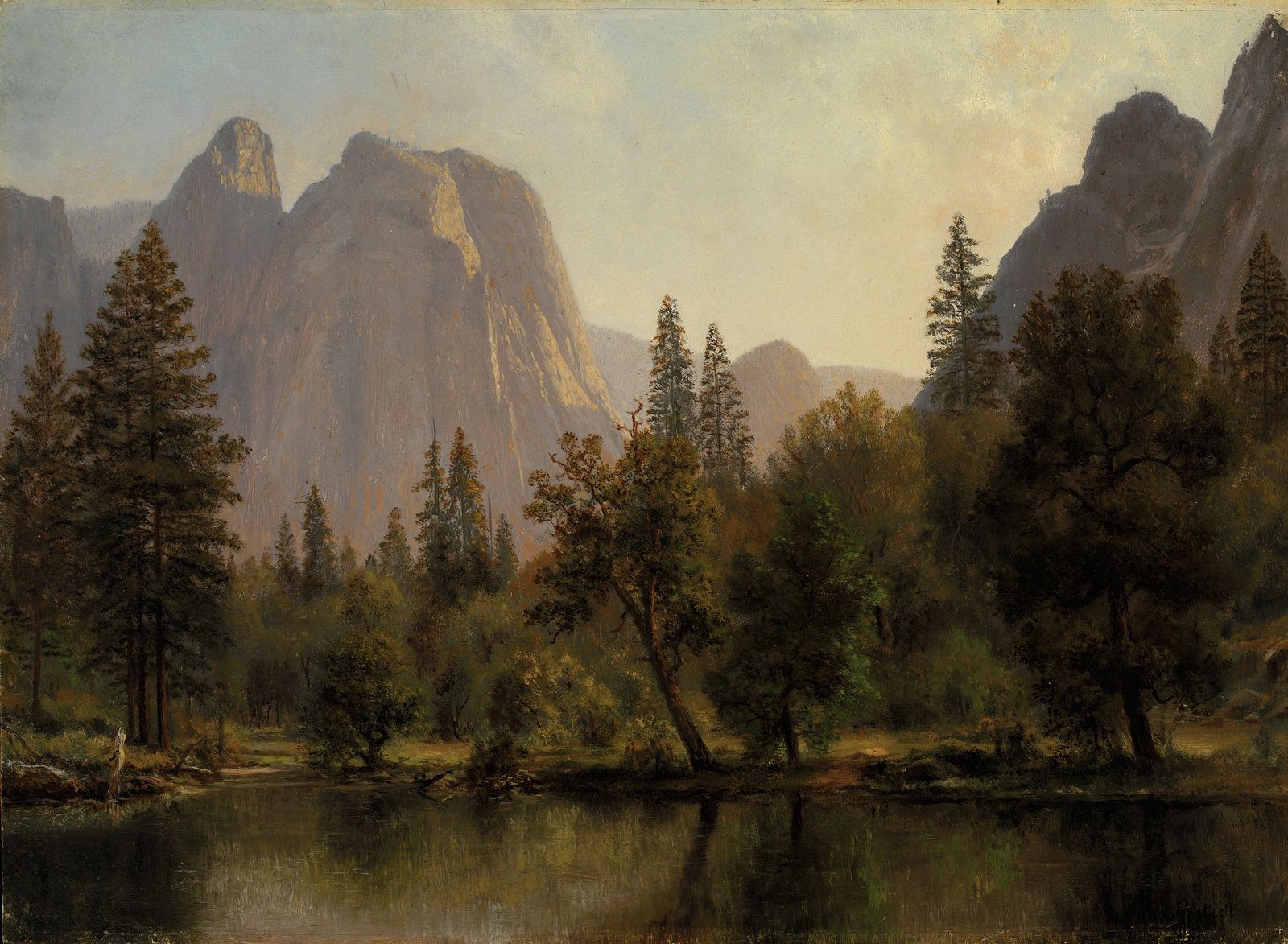
Cathedral Rocks rise through warm mist, while the lake in the foreground folds the trees and mountain colors back into reflection. The hard peaks acquire an echo almost like the resonance of bells.
Julia Margaret Cameron · 1874
Veiled in white, Enid raises a hand as she turns out of the darkness. The overexposed fabric becomes a curtain of light, leaving her face poised between appearing and disappearing.
Julia Margaret Cameron · 1874
The sisters’ heads press close within the same oval, one looking directly out and the other inclining sideways; their intimacy comes not from an embrace but from the nearly shared distance of a breath.
Julia Margaret Cameron · July 1874
A father and his two daughters lean together from three directions; six hands overlap before their chests, concentrating the family bond into a visible cluster of touch.
Julia Margaret Cameron · June 1874
A fisherman raises an arm to adjust the seated woman’s headscarf; the farewell pauses before they have drawn apart, and the darkness beyond the curtain resembles the sea to come.
Julia Margaret Cameron · 1875
Three women in elaborate dress stand side by side within a dark, threshold-like frame. Their frontal poses and costumes elevate a family photograph into a scene from a Victorian legend.
Gustave Caillebotte · 1876
A young man looks down on a Paris street with his back to us; his black silhouette and a red chair inside separate the bright city into a stage that can only be viewed from afar.
James McNeill Whistler · 1879
At low tide, the riverbank is strewn with small boats, wooden posts, and slanting masts, while a tavern and row houses crowd the water’s edge. London is recognized not by landmarks but by the disorderly traces of labor.
Rosa Bonheur · 1880–1890s
A worker in the foreground swings a long pole to tend the charcoal pile; smoke swallows his companions and the trees behind, leaving the force of labor clear only in his extended pose.
Auguste Rodin · model 1880; cast 1886
John the Baptist opens his mouth as if still crying out. Hollow eye sockets, a rough beard, and the uneven bronze surface fix that voice in a weathered face.
Auguste Rodin · about 1880
Two bodies are tightly entwined on an almost blank sheet: the darker figure lowers its head, while the paler one seems to be drawn back from the embrace.
Albert Bierstadt · ca. 1882
A river opens toward the viewer between two immense cliffs; reddish-brown rock walls resemble open doors, while distant peaks and cloudlight draw the entrance deeper into the valley.
Albert Bierstadt · ca. 1889
A cold blue sea stretches across the foreground; snow peaks rise in stages behind mist, and a great rock at right stands like a gate, pressing the distant chain deeper into the cold.
James McNeill Whistler · ca. 1890
A young woman looks directly out from an olive-green background; black hair, warm brown skin, and a gray-green collar draw close together, making the portrait feel like a harmony played at low volume.
Henri Rousseau · 1892
People join hands and dance around a tree as tricolor flags ripple across the blue sky, turning a national celebration into an almost childlike rhythm of color.
James McNeill Whistler · 1896
Two women wrapped in heavy, full-length furs bend side by side, one touching her forehead and the other lowering her head; their dark garments compress a private exchange into an almost indivisible shared outline.
James McNeill Whistler · 1896
Bridge railing and riverbank angle into the center of the sheet as a flock of pigeons becomes a flurry of small marks in the sky; brief flight breaks apart the city’s hard edge.
Gustav Klimt · 1897–1898
A woman lets her head fall back beyond the chair, her almost inverted face floating from the pale paper as fatigue and release sink together along the line of her neck.
Auguste Rodin · about 1898–1900
The nude model stands frontally with her hands crossed over her chest; repeated leg lines near her feet expose an uncertain search for balance beneath the calm pose.
Gustav Klimt · about 1901–1902
The same seated pose is approached twice, from behind and from the rear side; long hair conceals the face, and the curves of back and buttocks replace identity as the focus of observation.
Auguste Rodin · 1908
Mary Magdalene clings to the upward-reaching Christ. Smooth bodies press out of a roughly hewn block, and the embrace resembles a resurrection not yet freed from its material.
George Bellows · 1913
Fluorescent green vines surge toward violet-gray rocks, abruptly checked by the deep blue sea behind; broad, coarse strokes make the coast seem to radiate heat in the sun.
George Bellows · 1916
A preacher extends an arm in blessing over a row of men in prison uniforms; the standing black robe and seated striped bodies place religious comfort and institutional confinement on the same platform.
George Bellows · 1916
A woman in bed raises one leg high; the sharp contrast between her heavy body and serious exercise pose turns weight loss into a private and difficult performance.
Auguste Rodin · n.d.
Two reclining bodies overlap on the sheet; a long foreground leg cuts diagonally across the entire image, while a face with closed eyes emerges from the crook of an arm behind, turning rest into a complex knot of joints.
George Bellows · 1918
Cavell, dressed in white, descends the high steps alone, while the rifles and crowd below remain hidden in darkness. Her bright figure seems marked in advance as the target of the entire prison.
George Bellows · 1921
Reclining bodies, standing bathers, and the distant sea overlap along a rocky shore; exaggerated, extended legs cut a summer swim into a set of unstable diagonals.
George Bellows · 1921
A broad black hat presses like a horizontal eave above the woman’s eyes; her frontal face and folded hands maintain a lucid stillness amid the elaborate clothing.
George Bellows · 1923
A group of naked men crowd a steam bath to weigh themselves, wash, and talk; stripped of the business world’s formal clothes, only bellies, poses, and mutual scrutiny remain.
George Bellows · 1924
Mr. and Mrs. Phillip Wase sit in separate armchairs, both facing forward without looking at one another. A small oval on the wall between them resembles a third pair of eyes measuring the distance between the couple.
CHAPTER IV · VISUAL DIALOGUE
When light shifts from a golden revelation to the scene of a musicians’ brawl, how does it change a painting’s sense of reality?
ABDrag the divider
to watch form migrate
ONE-MINUTE LOOKING
01YOUR POCKET MUSEUM
Saved artworks stay on this device. Bring works from different periods together and build a history shaped by your own attention.
Your collection is empty.
Select ♡ beside any artwork to begin your own looking path.Save your first artwork →Organizes a flat surface into depth that the eye can enter.
Uses strong light and dark to shape volume, drama, and moral focus.
Lets contours dissolve like smoke so emotion remains unresolved.
Places separate color dots that mix in the viewer’s eye.
Looking is never neutral; it connects desire, identity, and power.
Allows color, line, and shape to stop obeying the visible world.